Home & Entertaining
A Seasonal Menu for Lingering
This is a gathering table, not a dinner party. People graze, build plates, and stay longer than planned.
By: Bluhoneí Editors | Published: May 28, 2026
By the final weeks of spring, the light lasts longer, the windows stay open, and the evenings invite lingering without requiring a whole production.
This new season asks for a different kind of table: lighter, brighter, but still anchored, so it doesn't feel flimsy. This is a gathering table, built for grazing, building plates, and staying longer than planned. That's the goal.
Three things guide every table:
- One bright thing. Citrus, fresh herbs, a sharp vinaigrette, something with crunch. Brightness is what makes a spring table feel alive rather than just light.
- One grounding thing. A roast, a char, something creamy enough to give the table weight.
- One make-ahead thing. So you're present when it matters. The best hosting happens when the work is already done and you're simply enjoying the company.
The Board
Composed, not crowded. Three cheeses, two salty elements, two sweet elements — that's the full range without the excess.
- Cheese: A soft — fresh goat cheese or whipped ricotta if you want something gentler. An aged — Manchego or Comté. A blue or washed rind only if your table welcomes it — Taleggio works well here.
- Salty: Castelvetrano olives. Marcona almonds or pistachios if that's what you have.
- Sweet: Dried apricots, torn or sliced. A small dish of honey — a light drizzle over the soft cheese if you want it.
Three cheeses doesn't mean excess — it means range. Keep portions modest and let the board breathe.
The Salad
One large bowl, built for the season. Mixed greens or arugula if you want more bite, fresh dill, parsley, thinly sliced radish, shaved fennel. It's crisp, a little aromatic, and exactly right next to anything bright and briny on the table.
The dressing is a lemon-Dijon vinaigrette — bright, fast, and forgiving. Olive oil, fresh lemon juice, a small spoon of Dijon, salt and black pepper. Whisk it together and taste as you go. A touch of honey rounds it out if the fennel needs softening. If you want it even simpler — olive oil, lemon, and salt is enough.
Make it ahead, dress it last. That's your recipe.
The Anchor
Lemon-garlic-herb prawns. Serve them warm, straight from the pan or oven to the table — this is the moment that makes the gathering feel like a meal without making the host disappear into the kitchen.
Olive oil, garlic, lemon zest and juice, fresh parsley or dill. A pinch of chili flake if you want a little heat. That's the whole recipe. It comes together faster than your guests will notice and it's the kind of thing that makes people ask what you did differently.
Serve straight from the oven in a gratin dish that's meant to live on the table. Copper does the work beautifully here — the kind of piece that earns its place.
The Pour
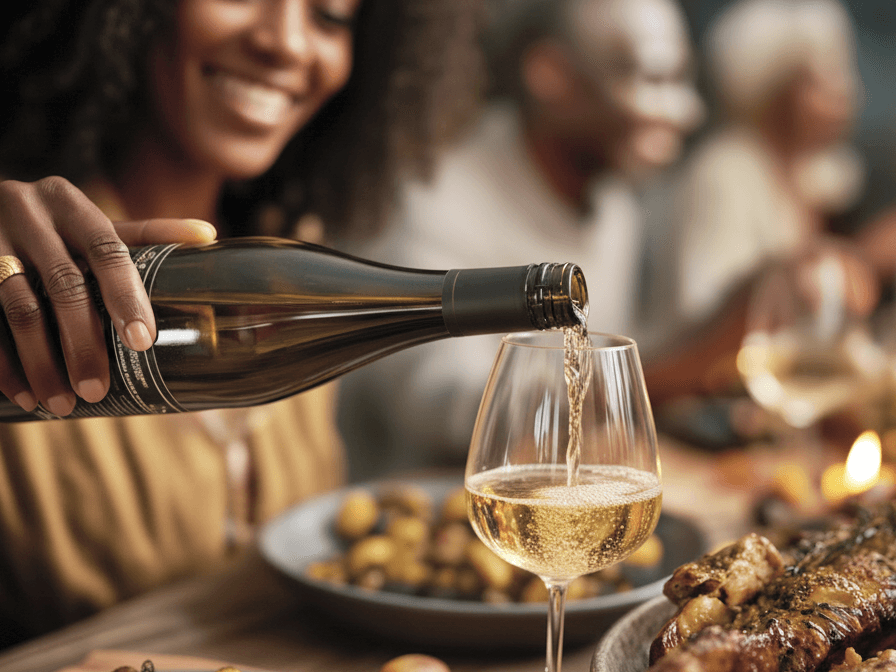
For a table built around prawns, brine, fresh herbs, and cheese, the bottle logic is simple: high acid, freshness, nothing too heavy.
If the menu is bright and herby, reach for a Sauvignon Blanc, Vermentino, or Grüner. If you've leaned into something creamier or roasted, a balanced Chardonnay, Chenin Blanc, or sparkling will hold the table. And if you want a red, Gamay, lightly chilled, keeps the evening light without overpowering the table.
If you're only choosing one bottle, choose the one that keeps the table flexible. A sparkling brut covers almost everything on this menu and signals that the evening was considered.
The Pace
The board goes out first. That's your buffer — it gives guests something to reach for while you finish everything else without rushing. Pour the first glass before the food is perfect. Treat that as the standard, not a suggestion.
If you're adding a vegetable moment — blanched asparagus dressed simply, or snap peas tossed with lemon and flaky salt — let it land with the salad and prawns.
Dessert is already handled. What's left on the board — the honey, the dried apricots, whatever cheese remains — is the end of the meal. Plate nothing. Let the table finish itself.
A spring table has one requirement: the host is actually in the room. The light is longer, the evening is yours. Set the table, pour the first glass, and let the rest follow.
“Simple is not the same as careless.”
Before you go
Consider This, straight to your inbox. No noise in between.
More from Home & Entertaining