Home & Entertaining
The Minimum Effective Dose for Hosting
A good gathering needs a few thoughtful elements done with care, not a hundred things done adequately.
By: Bluhoneí Editors | Published: July 21, 2026
This piece includes affiliate links. If you buy something through one, Bluhoneí may earn a commission — at no extra cost to you.
The list starts piling up before a single invitation goes out. There's the whole house to clean, flowers to buy, a menu to plan, and a cocktail worth photographing to make. The table needs styling, something needs baking, the music needs curating, and the guest bathroom has to look like it's under review. And somehow, after all of that, she's supposed to still be relaxed enough to enjoy the people walking through the door.
That list was never the requirement. Somewhere along the way, it just started to feel like one.
The Case for Less, But Better
There's a smaller set of choices that creates the feeling a gathering is supposed to have, and it's shorter than the list suggests. Call it the minimum effective dose for hosting: the fewest, best-chosen elements that do the real work, instead of a hundred smaller efforts that mostly cancel each other out.
Five things carry an evening:
- Good lighting that makes everyone look and feel a little more at ease.
- Something good to drink.
- One food anchor that's generous, not a spread of half-measures.
- A place to sit that's properly comfortable.
- A host who is present, not still moving through a mental checklist somewhere in the back of her mind.
Almost everything else on the original list is optional, not essential:
- Multiple appetizers, when one would do.
- A tablescape with more pieces than the meal has courses.
- Deep-cleaning rooms no guest will enter.
- A cocktail menu with more steps than the main course.
- A dessert table when one good dessert would land harder.
- The apology at the door before anyone's even sat down, explaining what didn't get done. Nobody was waiting on any of it.
The formula underneath all of this is simple:
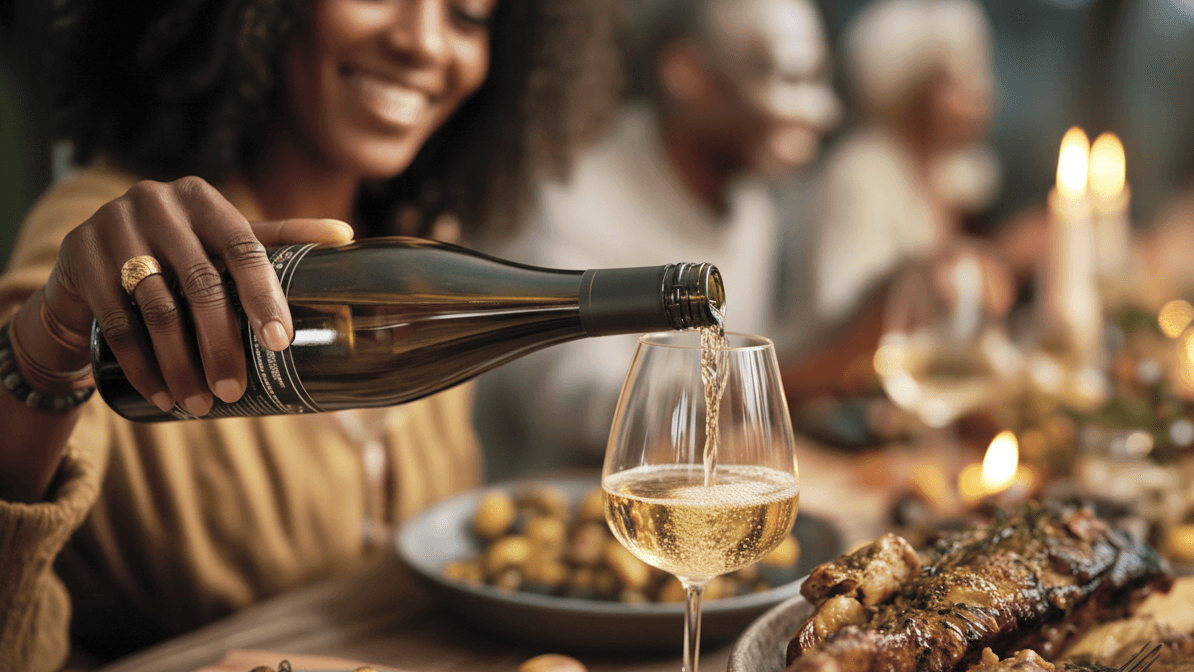
- One drink, chosen well. A set of Riedel stemware is a good example of the principle in action: one glass, chosen well, does more than five chosen adequately, and a simple pour ends up carrying more weight at the table than it should.
- One main.
- One fresh element to cut through it.
- One thing bought, not made, because not everything has to prove effort to be worth serving.
- One personal detail, the kind that tells guests something true about the house they're in rather than something borrowed from a table they saw somewhere else.
In practice, that might look like wine, a roast chicken, a good green salad, and real bread. It might be spritzes, olives, a simple pasta, and something citrus for dessert. It might be grilled fish, roasted potatoes, greens, and a chilled white wine. It might just as easily be a store-bought tart, dressed up with crème fraîche and whatever fruit looks good that week. None of these require a second trip to the store the morning of.
The real benefit is what happens when the host isn't depleted before the first person arrives, not just the time saved. A present host warms the room instead, without doing much of anything extra at all.
Hosting was always supposed to be generous. Somewhere along the way it started feeling punishing instead, and that was never the point.
“A tired host, however beautifully the table is set, changes the temperature of the whole room.”
Doing less here means keeping enough of herself in reserve to be truly there for the people she invited, not caring less.
Before you go
Consider This, straight to your inbox. No noise in between.
More from Home & Entertaining