Wellness
Wellness Beyond the Performance
Not everything that restores you needs to be witnessed.
By: Brandi Murphy | Published: May 7, 2026
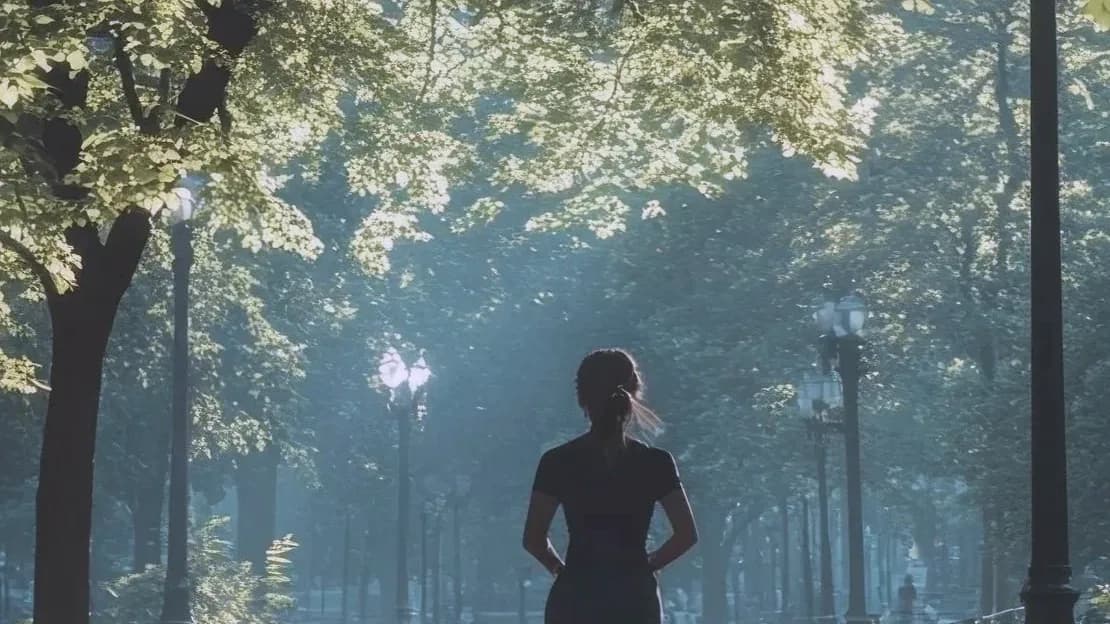
I was struggling through what was supposed to be my Sunday long run when the thought crossed my mind almost as a joke. What if I captured this?
I'm not talking about a casual selfie at mile one. I mean the full Instagram production. The overhead drone reel queued to the perfect trending song to set the vibe. Those side angles that pull back slowly to capture you mid-stride while the city is still dark around you. #upbeforeyou.
I held that image in my head for about two seconds before something in me completely rejected it.
This run belongs to me in a way I don't fully have language for — the early dark, the silence and slowness of the hour. Any footage outside of my own thoughts would change that. The act of capturing it would ask me to become aware of myself in a way that would cost me the very thing I showed up for.
I run because it gives me something back. It's tangible. I've never needed anyone else to see that for it to be true.
Running is only where I noticed it first. The same pressure has moved into nearly every other corner of taking care of yourself: the expectation that care, in order to count, should also be visible to others.
At some point, wellness became something to display, then something to critique. Strength training, cold plunges, hormone conversations, supplements, sleep tracking — all of it can have merit. The question is whether it only counts when it's shared in public.
But the culture that formed around these practices shifted the intent. What started as a conversation about feeling better became a visual language for living correctly. And somewhere in that translation, the entire point changed.
There's a question underneath all of it: does this restore me, or does it look like something worth showing? The culture keeps nudging us toward the second one. That's a different question, and it asks something different of us: not just our time and effort, but our attention, our images, and the willingness to be witnessed even in the moments that were meant to be private.
If privacy is part of what makes something restorative, wellness should be the one place we don't have to perform.
I know what mine looks like. A few minutes of stillness before the day reaches me. The miles I forgot to log and don't mind. A practice that exists entirely outside of anyone's awareness but my own. I'm not protecting it out of secrecy. I know the moment it becomes content, it turns into something else I have to maintain, and something I could, in the eyes of others, do wrong.
There's a real difference between the appearance of wellness and the experience of being well. One is legible and easy to optimize for engagement. The other is softer, less consistent, and almost never photogenic.
When care becomes content, what do you lose? The run becomes the running visuals. The morning ritual becomes the aesthetic of a morning ritual. You end up doing two things at once: the actual work of caring for yourself, and the parallel work of documenting that you're someone who does.
What restores you should not become another task.
Time is part of the cost, but not the whole of it. Care asks for real presence. You have to actually be in it for it to work. The moment you step outside of it to witness and frame it, something about the practice changes. You got the shots, but you sacrificed the restoration.
Women carry a particular fluency in this kind of invisible labor. We know how to make things look right. We've been doing it in every other area of our lives for a long time, which is exactly what makes this fatigue so specific. Performative wellness doesn't just live in a feed. It moves into the one space that was supposed to ask nothing of us and turns it into work.
What if the most radical thing you could do right now is take care of yourself and tell no one?
The unperformed version looks different for everyone. For some it's what goes into the body: the supplements taken consistently, the meal made without narration. For others it's the walk no one knows about, or ten minutes of silence before anyone needs anything. No caption. No evidence it happened beyond the way you feel by noon.
That's the practice that belongs entirely to you, and asks nothing of anyone watching.
“Private wellness doesn't need an audience. It just needs you.”
Before you go
Consider This, straight to your inbox. No noise in between.
More from Wellness